
-
 Registered Channel Partners
-
 Partner With Us
-

-




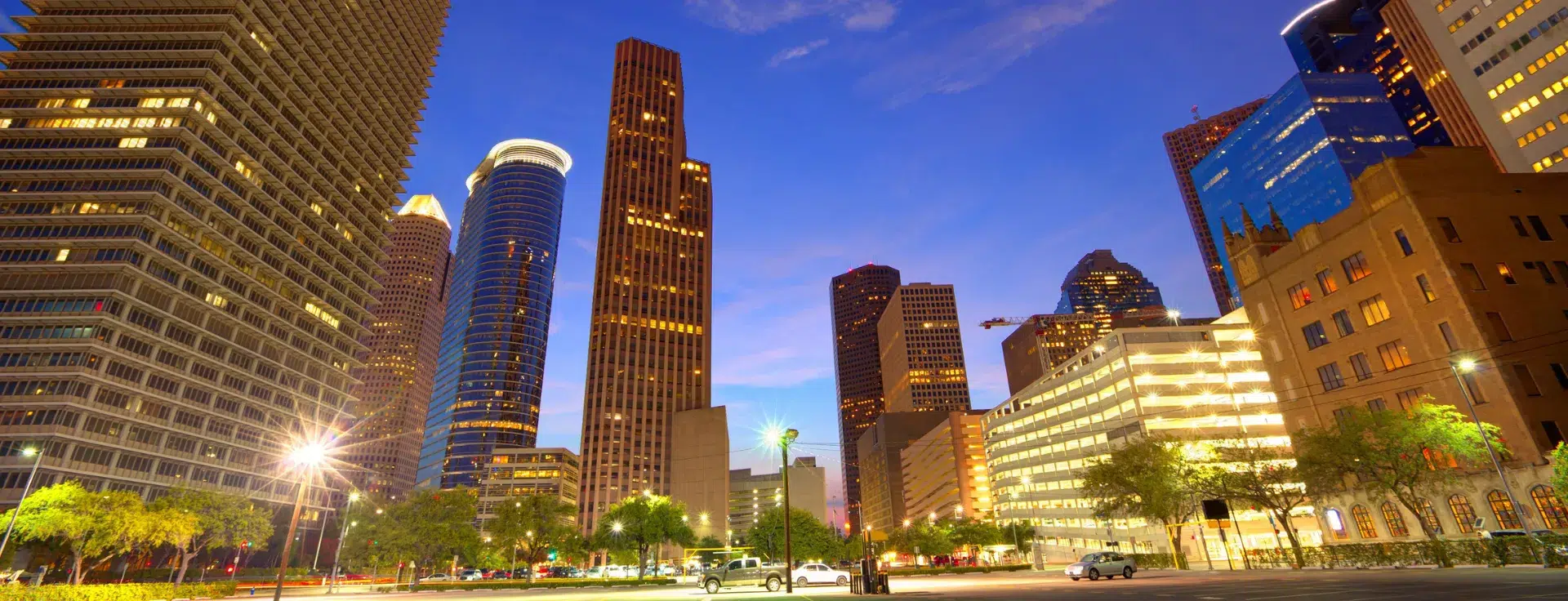
High Rise Buildings: Meaning, Definition & Construction of Modern Residential Towers
Table Of Contents
High rise buildings have become a defining feature of modern urban development, especially in rapidly expanding Indian cities where efficient land use is essential. As cities grow vertically, these structures combine advanced engineering, safety regulations and planned infrastructure to support contemporary residential and commercial living.
Understanding the high rise building meaning helps explain how modern cities accommodate growing populations while maintaining organised infrastructure and safety standards.
Key Takeaways
- High rise buildings optimise limited urban land through vertical development
- They are designed using specialised structural systems to handle wind and seismic forces
- Modern towers integrate fire safety, water management and evacuation planning
- High rise residential buildings support dense city living with planned amenities and services
- Such developments often emerge in prime urban corridors with strong infrastructure access
- Engineering standards and national building regulations play a central role in their design and construction
What is a High Rise Building?
High rise buildings refers to structures designed to accommodate multiple floors vertically, supported by specialised structural and safety systems.
It generally includes buildings where evacuation, fire protection and structural design require mechanical assistance such as lifts, pressurised staircases and advanced services. Unlike low-rise developments, these towers depend heavily on engineered systems for daily functioning and safety.
Modern high rise buildings integrate residential, commercial and mixed-use spaces while optimising land utilisation in dense urban environments.
High Rise Building Definition as per NBC in India
According to the National Building Code (NBC) of India, issued under the Ministry of Housing and Urban Affairs (MoHUA):
- Typically, buildings above 15 metres in height are classified as high-rise under NBC guidelines, subject to local authority adoption .
- Such buildings must comply with specialised fire safety, evacuation and service requirements.
NBC provisions mandate:
- Fire lifts and refuge areas
- Pressurised staircases
- Dedicated fire-fighting shafts
- Advanced alarm and sprinkler systems
These standards ensure that high rise building construction in India follows uniform national safety benchmarks.
How Many Floors Make a Building High Rise?
The classification of a high-rise structure in India is determined primarily by building height rather than the exact number of floors. As per the National Building Code (NBC) of India, any building measuring 15 metres or more in height is categorised as a high-rise because such structures require specialised fire safety systems, mechanical evacuation planning and enhanced structural design standards.
In practical terms, this height generally translates to around 5 to 7 storeys, although the number may vary depending on floor-to-floor height, podium levels or double-height spaces incorporated into the design. Modern residential towers often exceed this threshold significantly, with developments in metropolitan cities reaching 30, 40 or even 60+ floors, particularly in dense urban markets.
Therefore, while people commonly associate high-rise buildings with tall skylines, the official classification is based on safety and engineering requirements linked to height, not simply the storey count.
Key Characteristics of High Rise Buildings
Common features defining modern high rise buildings include:
- Vertical structural systems using reinforced concrete or composite frames
- Lift-dependent circulation systems
- Centralised utilities and service shafts
- Mechanical ventilation and pressure control systems
- Advanced fire and evacuation infrastructure
These characteristics distinguish high rise residential buildings from conventional apartment blocks.
Types of High Rise Buildings
1. High Rise Residential Buildings
Designed primarily for housing, these towers include amenities, parking podiums and shared infrastructure, forming the backbone of modern urban communities.
2. Commercial and Office High Rise Buildings
Corporate towers built for offices and business operations, often located in CBDs and IT hubs.
3. Mixed-Use High Rise Developments
Combine residences, retail and offices within one integrated structure, reducing commute distances and supporting walkable neighbourhoods.
4. Luxury & Green Certified High Rise Towers
Premium towers incorporating sustainability certifications, energy efficiency systems and smart building technologies.
Construction of High Rise Buildings: Step-by-Step Process
1. Foundation & Structural Framework
High rise building construction begins with deep pile or raft foundations to support vertical loads. Structural frames are engineered to resist wind and seismic forces.
2. Engineering Behind Water Supply in High Rise Buildings
Water is pumped through zoned pressure systems and overhead tanks to ensure uniform distribution across multiple floors, a critical engineering requirement in tall structures.
3. Fire Safety Requirements for High Rise Buildings
NBC Chapter 4 mandates:
- Fire detection and alarm systems
- Automatic sprinklers
- Smoke management systems
- Emergency evacuation routes
Are High Rise Buildings Safe? Structural & Earthquake Safety
Modern high rise buildings in India are engineered under strict safety frameworks defined by the National Building Code (NBC) and seismic design standards issued for different earthquake zones. Structural systems are designed after detailed wind-load and seismic analysis, ensuring that buildings can safely withstand environmental forces common in dense urban regions.
From a practical perspective, developers incorporate reinforced concrete cores, shear walls and structural redundancy, meaning that loads are distributed across multiple structural elements rather than relying on a single support system. This significantly reduces the risk of structural failure. Fire safety is equally critical, high-rise towers include compartmentalised fire zones, pressurised staircases, sprinkler systems and designated refuge areas to enable safer evacuation during emergencies.
Residents may sometimes notice slight building movement or sway during strong winds, especially on higher floors. This is not a defect but a deliberate engineering feature. Controlled flexibility is designed to absorb and dissipate wind and seismic forces within safe engineering limits defined by structural codes.
Advantages of Living in High Rise Buildings
Living in a high rise flat offers several benefits:
- Wider city views and improved ventilation
- Reduced ground-level noise
- Access to shared amenities
- Efficient land utilisation supporting urban infrastructure
Many buyers today prefer luxury residential apartments within high-rise communities for lifestyle convenience and organised maintenance.
Challenges of High Rise Buildings
Despite advantages, certain considerations remain:
- Dependence on lifts and power backup
- Higher maintenance coordination
- Evacuation planning during emergencies
- Greater engineering complexity
However, modern project planning increasingly addresses these concerns through automation and safety compliance.
High Rise Buildings in India: Examples & Key Cities
1. High Rise Buildings in Mumbai
Severe land scarcity and consistently high real estate demand have pushed Mumbai towards vertical expansion more than any other Indian city. Prime micro-markets such as Worli, Lower Parel and Powai have witnessed the development of ultra-luxury high-rise residential towers featuring advanced structural engineering, sky amenities and mixed-use planning. Redevelopment projects and premium waterfront locations continue to drive the construction of taller residential buildings, making Mumbai the benchmark for high-rise urban living in India.
2. High Rise Buildings in Bangalore
Bangalore’s high-rise development is closely linked to the expansion of its IT and technology corridors. Areas such as Whitefield, Sarjapur Road and Outer Ring Road have seen rapid growth of high-rise residential buildings designed for professionals seeking proximity to business hubs. Modern towers here increasingly integrate sustainable design features, clubhouse ecosystems and large community layouts, reflecting the city’s shift from horizontal villa communities to organised vertical housing.
3. High Rise Buildings in Hyderabad
Hyderabad has rapidly evolved into a major high-rise destination, particularly across the Financial District and Gachibowli. Strong infrastructure planning, wider road networks and availability of large land parcels have enabled developers to build integrated residential towers with modern amenities and planned open spaces. The city’s growing technology sector and comparatively structured urban expansion have supported the rise of new-age residential skyscrapers catering to both end users and investors.
High Rise Buildings Around the World: Global Examples
Across the world, major global cities have embraced vertical construction to accommodate growing populations while optimising limited urban land. In Dubai, landmark towers such as Burj Khalifa demonstrate how super-tall buildings combine residential, hospitality and commercial functions within a single structure.
In New York City, iconic developments like One World Trade Center reflect advanced engineering, strict safety standards and dense urban planning. Similarly, Shanghai showcases rapid vertical expansion through towers such as Shanghai Tower, which integrates energy-efficient design and mixed-use functionality.
These global examples highlight how high rise buildings support economic activity, efficient land use and sustainable urban growth while shaping recognisable city skylines.
Garbage Chutes & Utility Systems in High Rise Buildings
Modern towers incorporate:
- Garbage chute systems for hygienic waste disposal
- Central HVAC and ventilation shafts
- Electrical risers and service floors
These systems enable efficient management across hundreds of residential units.
Investment Potential of High Rise Residential Towers
From an investment standpoint, high rise residential buildings have emerged as a preferred asset class in India’s organised real estate market. Their appeal goes beyond height or skyline presence, it is closely linked to location efficiency, planned infrastructure and evolving buyer preferences in large urban centres.
1. Prime urban positioning
High-rise towers are typically developed in well-connected micro-markets where land availability is limited. Proximity to business districts, metro corridors and social infrastructure strengthens long-term demand and helps sustain property value even during market fluctuations.
2. Strong end-user demand
Young professionals, expatriates and nuclear families increasingly prefer managed communities offering security, amenities and convenience. This consistent end-user demand improves rental absorption, making high-rise homes attractive for both rental income and resale potential.
3. Long-term capital appreciation
According to industry insights highlighted by IBEF, India’s urbanisation and rising middle-income population continue to drive housing demand. As cities expand vertically rather than horizontally, well-planned towers in established developments tend to witness steady capital appreciation over time.
4. Transparency and organised development
Modern high-rise projects are usually developed under stricter regulatory frameworks such as RERA, ensuring clearer documentation, construction accountability and professional maintenance standards. This increases buyer confidence and reduces investment risk compared to fragmented standalone developments.
As a result, buyers looking to invest in real estate increasingly view high-rise residential towers as a balanced option combining lifestyle value with long-term financial growth.
The Future of High-Rise Living in Modern Cities
High rise buildings with national building code certificates, represent the future of urban housing in India. Governed by strict NBC standards and advanced engineering practices, these towers combine safety, efficiency and modern lifestyle planning. For homebuyers, understanding the high rise building meaning, construction process and regulatory framework helps make informed decisions while choosing modern residential developments.
| Looking for luxurious living or planning to invest in high rise buildings? Explore L&T Realty’s premium high-rise residences designed for modern urban lifestyles and long-term value. |
FAQ
1. What is considered a high rise building in India?
Buildings typically above 15 metres in height are classified as high-rise under NBC guidelines, subject to local authority adoption.
2. How many floors make a building high rise?
Usually 5–7 floors or more, depending on floor height.
3. Are high rise buildings safe during earthquakes?
Yes, when designed according to seismic codes and NBC standards.
4. Do high rise buildings sway?
Slight movement is normal and engineered for structural safety.
5. Which cities in India have the tallest high rise buildings?
Mumbai leads, followed by Bengaluru and Hyderabad.
6. Are high rise residential buildings good for families?
Yes, due to amenities, security and organised infrastructure.
7. What is the height limit for high rise buildings in India?
Limits vary by city development control regulations and aviation norms.
8. Do high rise buildings offer better investment returns?
They can often show strong appreciation in prime urban markets.
Disclaimer: The information provided in this article is generic and is shared for informational purposes only. It is not a substitute for specific advice in your circumstances. You are recommended to obtain specific professional advice before you take any action/decision. The content is subject to change due to updates in laws or regulations; hence, you are recommended to check the information before taking any action/decision. L&T Realty does not claim that the information given in this article is entirely true and accurate.